
Why do my eyes feel worse at bedtime or when I wake up?
Your tears have a harder night than you do. When you sleep, tear production slows down, and anything that speeds up tear evaporation has hours to work on them. When you are awake, every blink spreads a fresh layer. At night there is no blink to help, so a small problem in the tear film shows up as burning at bedtime or grit in the morning.
We see this every week at both of our offices on S Washington Ave in Titusville: Downtown at 338 and Playalinda at 1114. Our own appointment book from September 2025 through August 2026 shows that about one exam in four is for someone new to us, so you do not need to be a patient already. You are in good company if your eyes feel fine at lunch and miserable by the late news.
- A ceiling fan or an air vent blowing over the bed all night
- A long evening on a phone or a laptop, when we blink less and less fully
- Eyelids that may not close all the way in sleep, which leaves a strip of eye open to the air
- Oil glands along the eyelid margins that are not putting out enough oil to keep tears from drying
- Some medicines, the years after menopause, rosacea, and contact lens wear, which can all add to it
Most of the time it is more than one of these at once. That is why we look at the eyelids and the oil glands before we suggest anything stronger than home care.
What helps dry eyes at bedtime and on waking?
Start with the room and the routine, then add heat and a night gel. Here is how the common patterns usually sort out.
| What you notice | What often helps at home | When we should look |
|---|---|---|
| Burning or tired eyes by bedtime after screens | Screen breaks, full blinks, and a heated eye mask before bed | If it happens most nights even with the mask |
| Gritty, scratchy eyes on waking | Fan off or turned away, a humidifier, and a night gel or ointment we recommend | If mornings stay rough after a few weeks of home care |
| Crusty lid edges or sticky lashes in the morning | A warm compress, then a gentle lid cleanser | If the lids stay red, swollen, or sore |
| Someone says your eyes stay partly open while you sleep | A night gel and no air blowing on your face | Soon, so we can check how your lids close |
| A red, painful eye, light that hurts, or a sudden blur | Nothing at home first | Call us the same day at (321) 269-2021 |
Night and morning dryness: what helps at home, and when to see us
A bedroom humidifier can help in the months the heat or air runs all night, and so can pointing the fan at your feet instead of your face. These are small changes. For many of our patients, they are half the battle.
Do warm compresses and heated eye masks really help dry eyes?
For many dry eyes, yes. Most dry eye starts in the meibomian glands, the small oil glands along the edge of each eyelid. Their oil sits on top of your tears and slows evaporation. When the oil thickens and the glands clog, a doctor calls it meibomian gland dysfunction, and your tears dry up too fast.
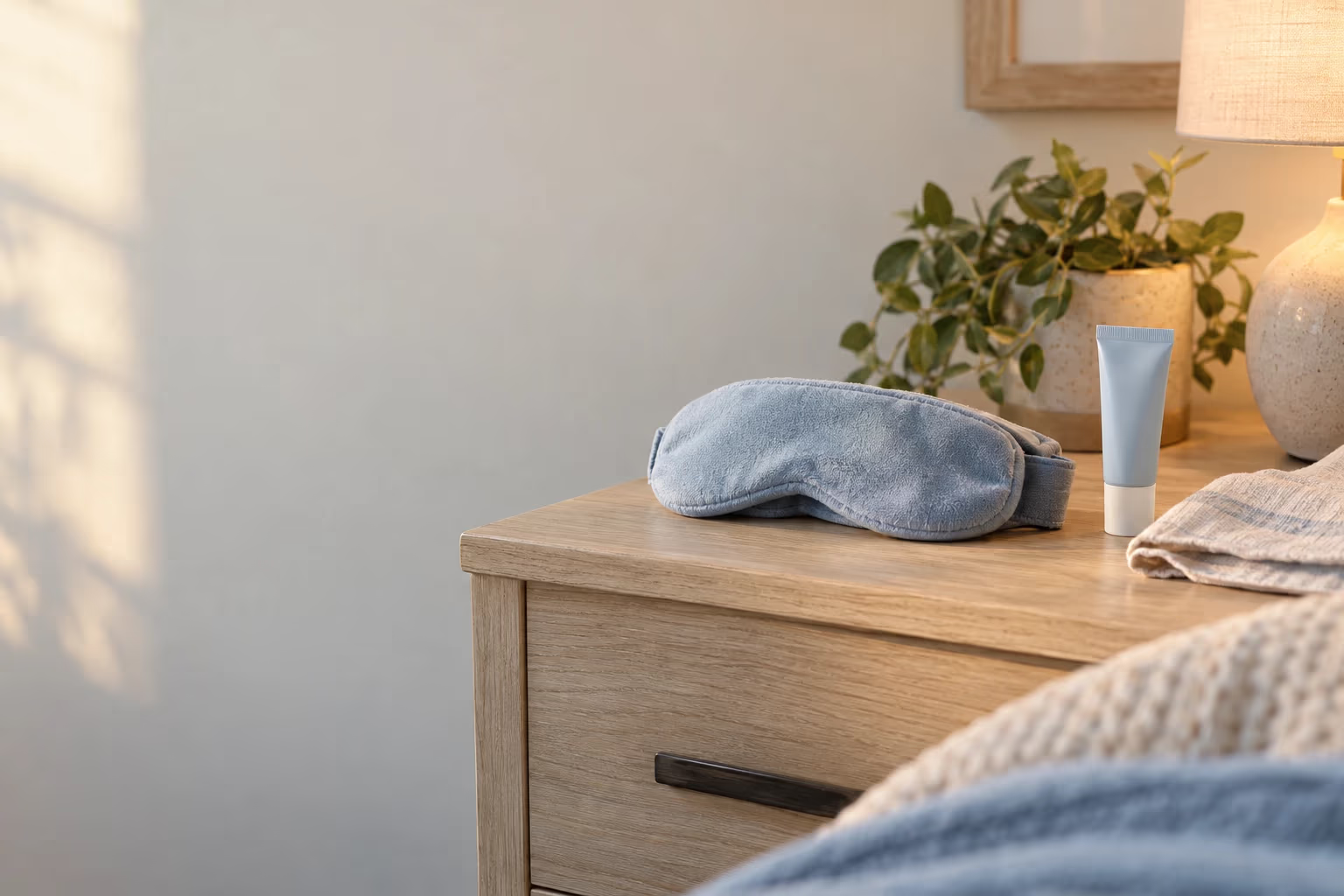
Steady warmth helps that thick oil melt and flow again. That is why a heated eye mask is one of the four things we ask most dry eye patients to start with at home, along with artificial tears, lid scrubs, and supplements. Dry eye disease is often a chronic condition, and warm compresses are not a cure. Used every day, they can relieve dry eye symptoms for many people with clogged glands.
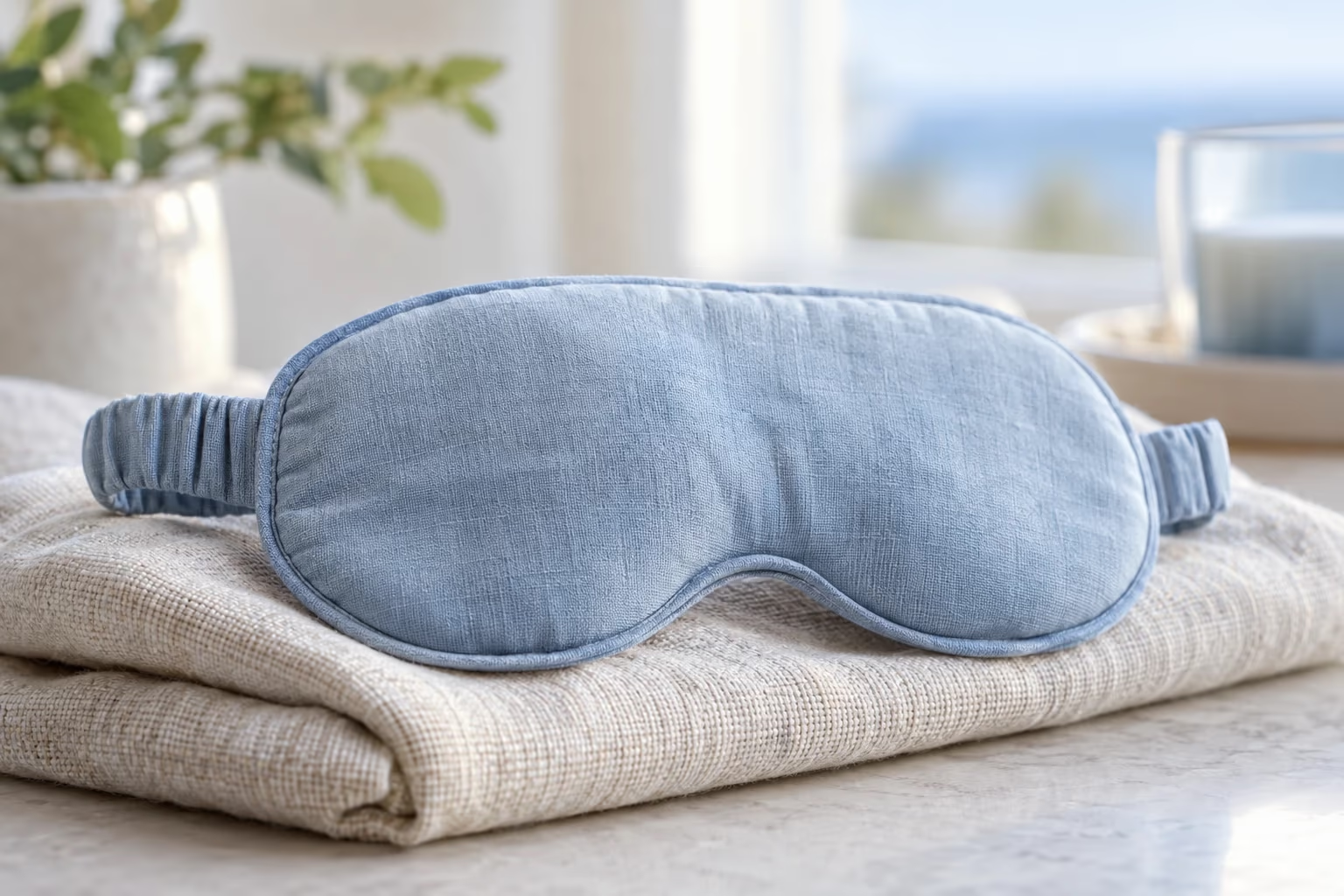
A washcloth in warm water works, but it cools in a minute or two. Heated eye masks hold the desired temperature longer, which is the whole point. They come in three common types:
- Microwave masks filled with beads or seeds that absorb moisture and give it back as moist heat
- Self-heating masks, single-use packs that warm on their own when you open them, handy when traveling
- Electric masks that plug in or charge by USB and hold one temperature for a set time
The best heated eye mask for dry eyes is the one you will use every night. Gentle, steady heat on closed eyes beats a mask that is too hot to keep on. A reusable mask warms up again every night, and a self-heating mask is easy to keep in a travel bag.
How do I use a heated eye mask safely?
- 1
Take your contacts out
Lenses come out before any mask or compress, and before any night gel.
- 2
Check the heat on your wrist
Warm, never hot. The skin around the eye is thin, so if it feels hot on the inside of your wrist, let it cool first. Follow the heating instructions on the package for a microwave mask.
- 3
Rest for about ten minutes
Lie back with the mask over closed eyes. Most of our patients do this once a day, often at bedtime, unless we gave you a different routine.
- 4
Clean the lid edges
Right after the heat, while the oil is soft, use the lid cleanser or lid scrub we recommended along the lash line.
If someone on your holiday list complains about dry eyes every morning, a heated mask makes a kind gift. We keep them on the shelf at both offices, and they are in our eye care products store on Dry Eye Rescue, where the code AKEREYE takes 10 percent off.
What does an eye gel or ointment do for dry eyes at night?
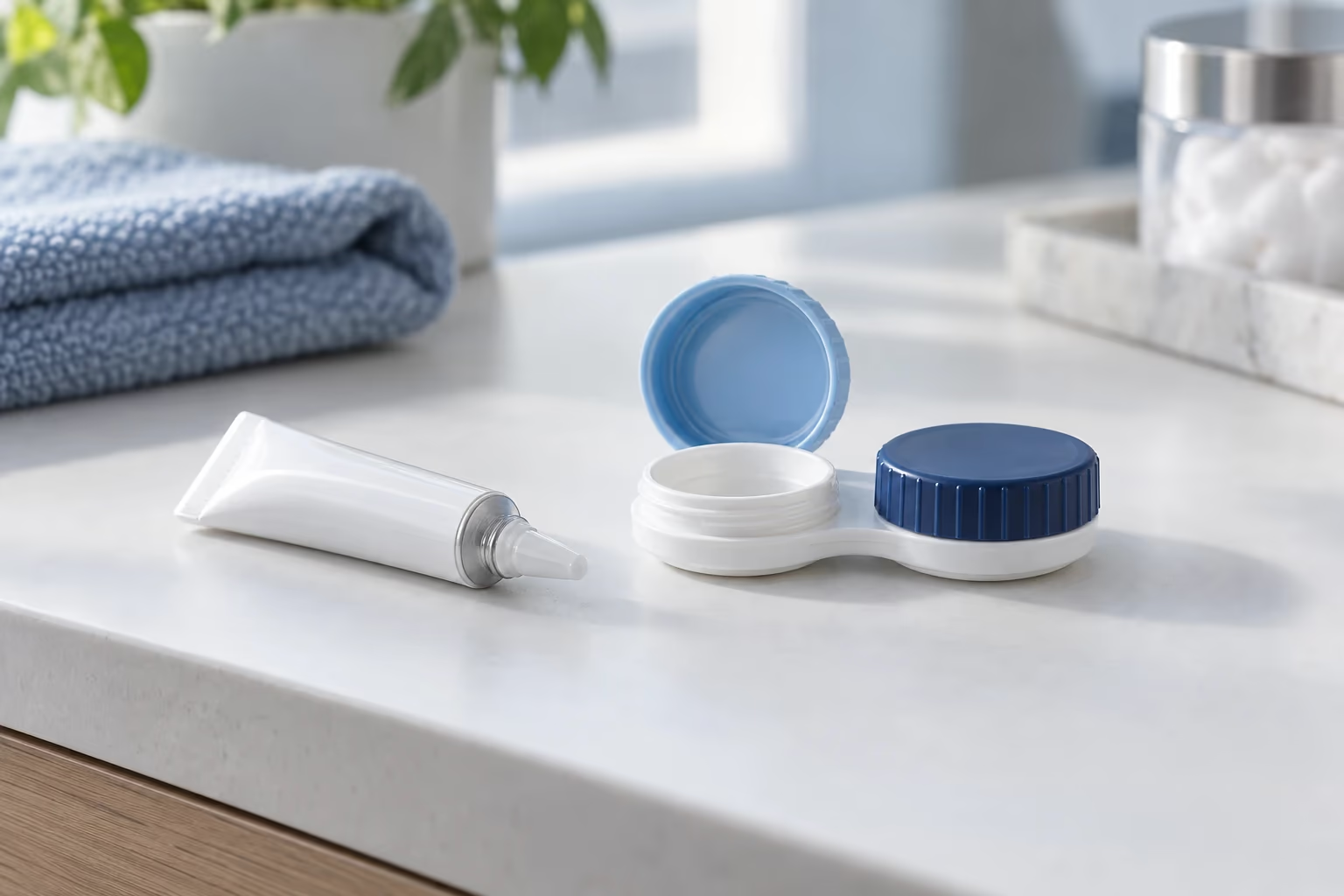
It stays put. Daytime artificial tears are thin, so they spread fast and wear off fast. A night gel or eye ointment for dry eyes is thicker, so it coats the eye longer while you sleep and protects the surface from drying air. The trade is a blur, which is why it goes in last, right before you close your eyes.
Gels are a little lighter. Ointments are the thickest and blur the most. Which one fits depends on how dry your mornings are, so ask us before you pick one off the shelf. Most patients start with whatever we name at the visit, and many use a preservative-free artificial tear by day and a gel or ointment at night. For the daytime bottle, eye drops for dry eyes come in more kinds than most people expect, so pick that one with the same care.
Gels and ointments are over the counter, and many HSA and FSA plans cover them. Prescription eye drops are another matter: those calm inflammation on the eye, we prescribe them after an exam, and they go to your pharmacy.
Can my eyes stay partly open while I sleep?
They can, and most people who do it have no idea. The medical name for eyelids that do not close all the way is lagophthalmos. A thin strip of eye left open all night dries out, and the lower part of the cornea often takes the worst of it. The clue is often a partner who mentions it, or eyes that are worst right when you wake.
It is something we check for, not something to guess at home. At a dry eye visit we watch how your lids close and how fully you blink, and we look at the surface of the eye for dry spots. If the lids are part of the cause, we tell you what fits. That may be a night gel, a change to the fan, or, for sagging eyelids, Opti-Lift, a treatment without surgery that strengthens the muscles around the eyes for a fuller blink, at our Downtown office.
When should I see an eye doctor in Titusville for dry eyes at night?
When a few weeks of nightly heat, a gel, and a quieter bedroom have not helped, it is time for a closer look. The same goes for mornings that blur, lids that stay red, or drops you reach for every hour. A dry eye evaluation looks for the underlying cause with a symptom questionnaire, an InflammaDry test for signs of inflammation, infrared photos of the meibomian glands, and colored dye drops that show dry spots on the eye.
What we find decides the treatment, and many patients use two or three together. Beyond the basics we offer punctal plugs that keep more of your own tears from draining down the tear ducts, meibomian gland expression, OCuSOFT thermal treatment in the office, LidScrubPro lid scrubs, OUST swabstix and Zocular gel for the lids and lashes, low-level light therapy, OptiLight IPL for the inflammation of rosacea, prescription drops, and Opti-Lift. See dry eye treatment for what each one does.
About half of our appointments start before noon, so a morning time, when your eyes feel their worst, is easy to find. Wednesday is the lightest day of our week, and the weeks after Thanksgiving are an easy time to get in.
All four of our doctors treat dry eye at both offices. Dr. Greg Aker and Dr. Amanda Aker see patients Downtown, on the second floor with an elevator, and Dr. Sarah Koehnemann and Dr. Jennifer Bradley see them at Playalinda, all on one floor. Only the Opti-Lift unit stays Downtown. The evaluation is usually billed to medical insurance, including Medicare, and some in-office treatments, like light therapy, are often not covered. We check your benefits before you come in. If your contact lenses dry out by evening too, the best contacts for dry eyes are often a matter of fit, and we can look at both in one visit.