
What are the best contacts for dry eyes?
The best contacts for dry eyes are the ones fitted to your natural tear film, and for many of our patients that means daily disposable lenses. All four of our optometrists fit contact lenses and treat dry eye at both Titusville offices: Downtown at 338 S Washington Ave and Playalinda at 1114 S Washington Ave. About one exam in five with us is a contact lens fitting, so contact lenses that feel like sandpaper by supper are something our eye doctors hear about often.
No single brand is best for every dry eye. Two people can wear the same lens and have very different afternoons, because the lens rests on a layer of tears that is different in every eye. So before we choose the best contact lenses for your eyes, we look at that layer and at the small oil glands along your eyelids. What we find decides the lens. Sometimes it also tells us the eye needs care before any lens will feel good.
Why do my contacts feel dry by the afternoon?
Florida is hard on contact lens wearers. Sun, wind off the river, and the dry air of an air-conditioned office all pull moisture from your eyes. Our own appointment book from September 2025 through August 2026 ran as full in June, July, and August as it did in winter. The air conditioning never really switches off here, so dry lenses do not take the summer off either. Long hours at a computer can worsen dry eye symptoms too, because we blink less while we read a screen. Wearing contact lenses is one of the common causes of dry eye on its own, along with age, hormone changes, some medicines, and rosacea.
Some eyes do not make enough tears, but most dry eye starts in the oil glands along the edge of the eyelids. When those glands clog or shrink, the oily layer of your tears thins out and your tears dry up too fast. A lens sitting on that thin layer is often the first place you notice it.
- Lenses that feel gritty or scratchy by mid-afternoon
- Burning or stinging that eases when the lenses come out
- Blurry vision that clears for a moment when you blink
- Eyes that water, even though they feel dry
Any of those dry eye symptoms is worth mentioning to your eye doctor. Behind contact lens dryness there are two questions: is it the lens, or is it the eye? Often it is a little of both, and that is why we look at them together.
Which contact lenses work best for dry eyes?
Most dry eyes end up in one of four places, and a trial lens goes on your eye before anything is ordered.
| Lens | Why we reach for it | What to know |
|---|---|---|
| Daily disposable lenses | A fresh lens every morning, and for some eyes a new lens holds moisture better through the day | No case, no solution, nothing to clean at night |
| Weekly or monthly soft contact lenses | Silicone hydrogel lenses let more oxygen through to the cornea, and sometimes a different lens material is all a dry eye needs | They need a case and solution, and a care routine written for that lens |
| Scleral lenses | The lens holds a layer of saline against the eye all day, which is why some patients with severe dry eye wear one | A specialty fitting that usually takes more than one visit |
| A break from lenses | Glasses for part of the day while we treat the dryness | If this is the right call for your eyes, we will say so plainly |
Contact lens choices we weigh for an eye that runs dry
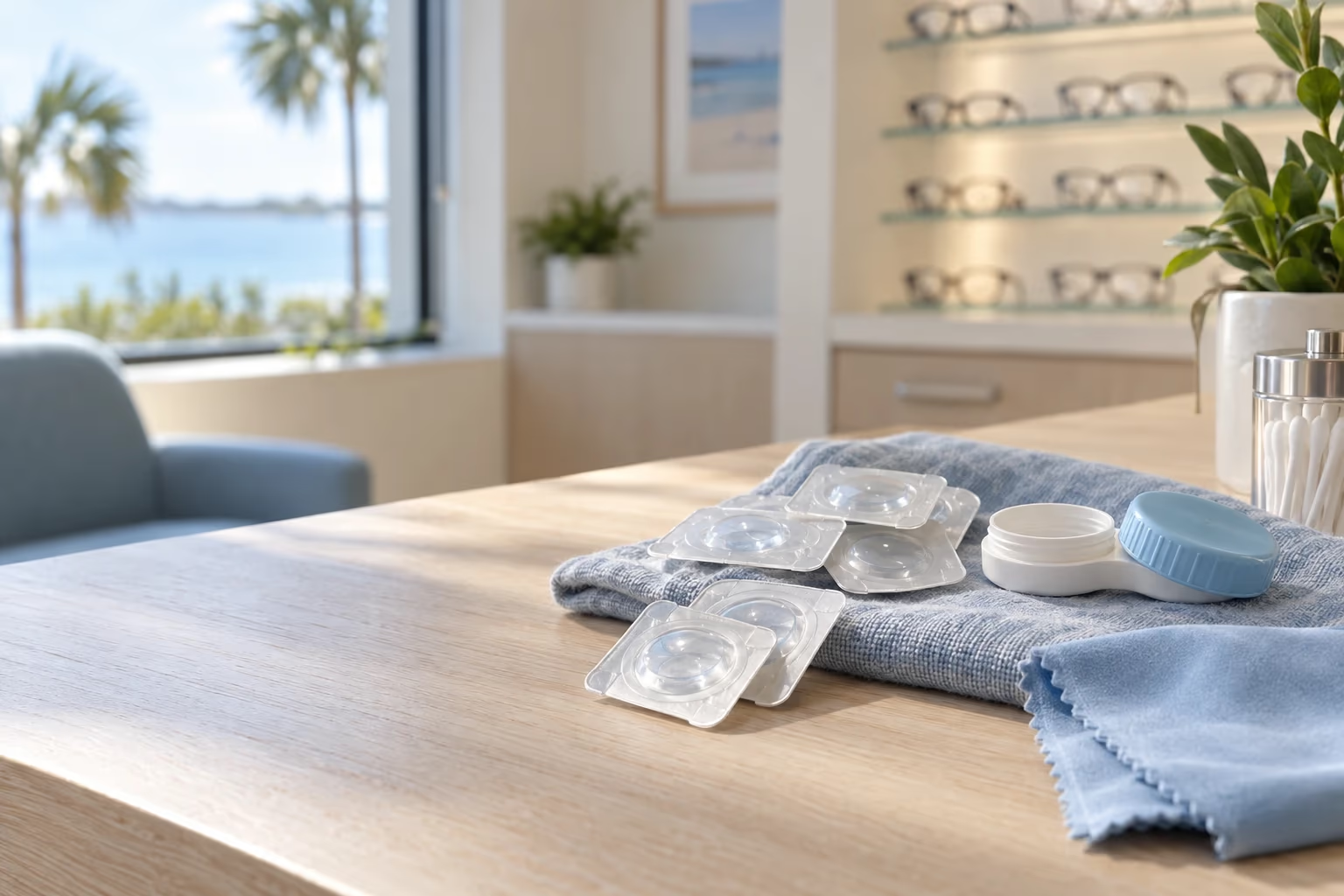
A daily disposable is often the first lens we reach for when an eye runs dry. You start every day with a clean lens, and you skip the case and the solution. When standard soft contact lenses will not sit right or stay comfortable, a specialty contact lens fitting opens up scleral and custom lenses shaped to your eye.
Are contact lens rewetting drops enough?
For mild dryness, sometimes. Contact lens rewetting drops and artificial tears can ease a dry afternoon and keep your eyes moist, and for some eyes that is all it takes. Drops treat the feeling, though, not the cause. If you are reaching for the bottle every hour, the fit, the material, or the eye itself needs a look.
Drops that help for an hour and then wear off often point to the oil glands in your eyelids. For dry eyes in general, a preservative-free artificial tear is the usual place to start. The rewetting drops and preservative-free eye drops our doctors recommend are in our eye care products store, so the bottle you order is the one we meant.
Which eye drops are safe to use with contact lenses?
Not every bottle on the shelf is made for an eye with a lens in it. Here is how the common kinds of eye drops work with contacts.
- Rewetting drops are made to go in with your lenses in. They add moisture to the lens surface so the lens moves easily when you blink.
- Lubricating drops, or artificial tears, coat the eye and add to your own tears. Some are made for contact lens wear and some are not, so read the label.
- Preservative-free eye drops are gentler on sensitive eyes that need drops several times a day, because preservatives can irritate the eye with frequent use.
- Redness relief drops shrink the blood vessels on the white of the eye. They hide the redness without treating the dryness, and they are not meant for use with contacts.
- Allergy relief drops can calm itchy, watery eyes, and allergies can make your eyes feel dry too. Many go in with the lenses out, so ask us first.
- Medicated eye drops, the kind we prescribe, usually go in with your lenses out. Follow the instructions we give you with the bottle.
If you are unsure, take your lenses out before any drop that does not say it is for contact lenses. Better still, bring the bottle to your next eye exam and we will tell you whether it is the right one.
When do dry eyes need treatment, not just a new lens?
Sometimes the lens is fine and the eye is dry. We treat dry eye every week at both of our offices, and our light therapy visits are busiest in September and March. Care starts simple: artificial tears, a heated eye mask, lid scrubs, and supplements at home. If that is not enough, a dry eye evaluation looks closer, with a symptom questionnaire, an InflammaDry test for inflammation, photos of the eyelid oil glands, and colored dye drops that show dry spots on the eye.
What the evaluation finds tells us which treatments fit. For a contact lens wearer, the plan can include:
- Punctal plugs, tiny collagen plugs that keep more of your own tears on the eye
- Meibomian gland expression and in-office heat treatment to help the oil glands flow
- Low-level light therapy with red and blue light for the glands and the lashes
- OptiLight IPL, quick flashes of light that can calm the inflammation of rosacea
- Prescription drops that calm inflammation on the eye
Dry eye usually has more than one cause, so many patients use two or three treatments together. All four of our doctors treat dry eye at both offices. The one exception is Opti-Lift, which stays Downtown because the unit cannot move between offices. We would be glad to start your dry eye treatment at whichever office is closer to you.
What happens at a contact lens refit for dry eyes in Titusville?
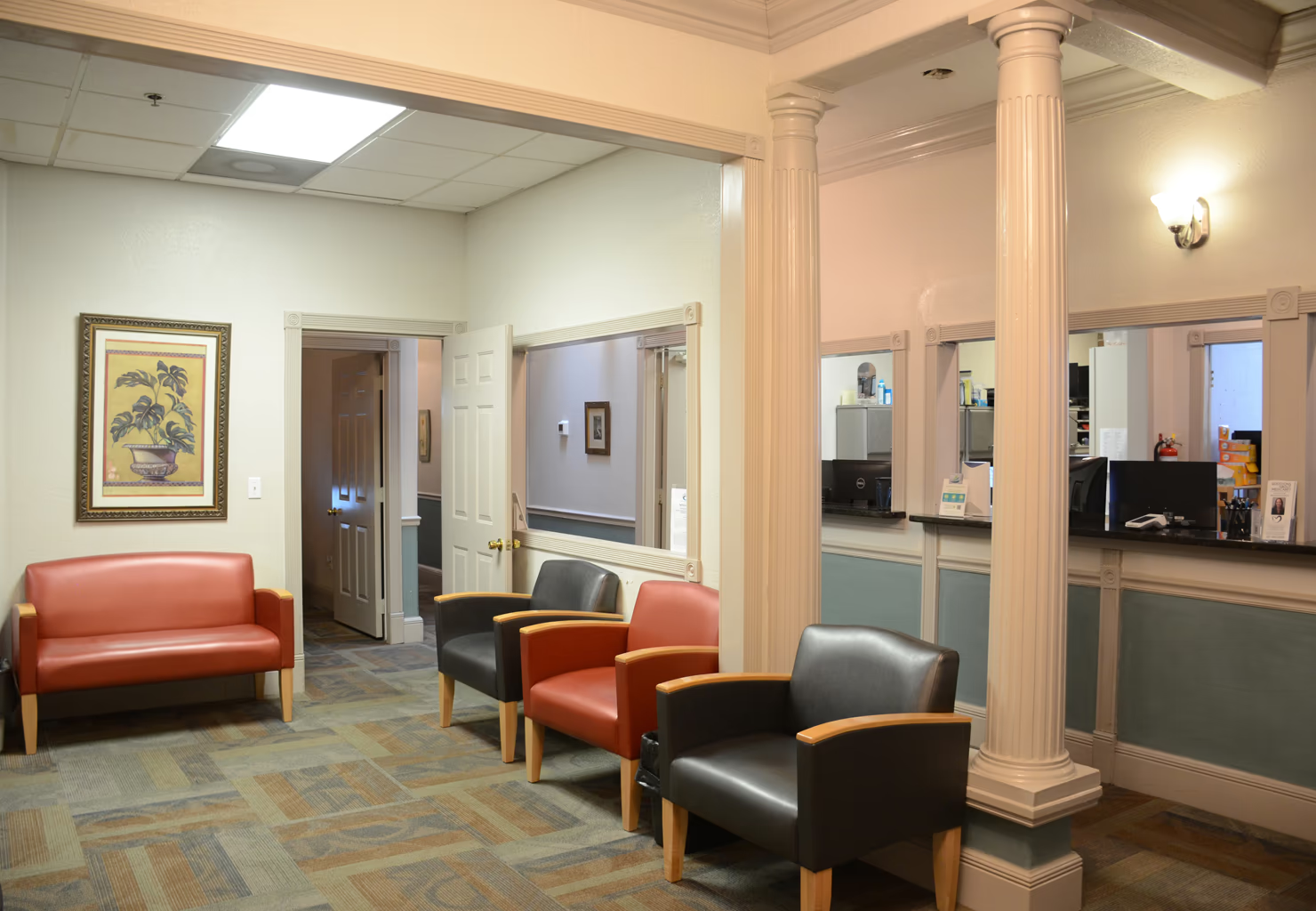
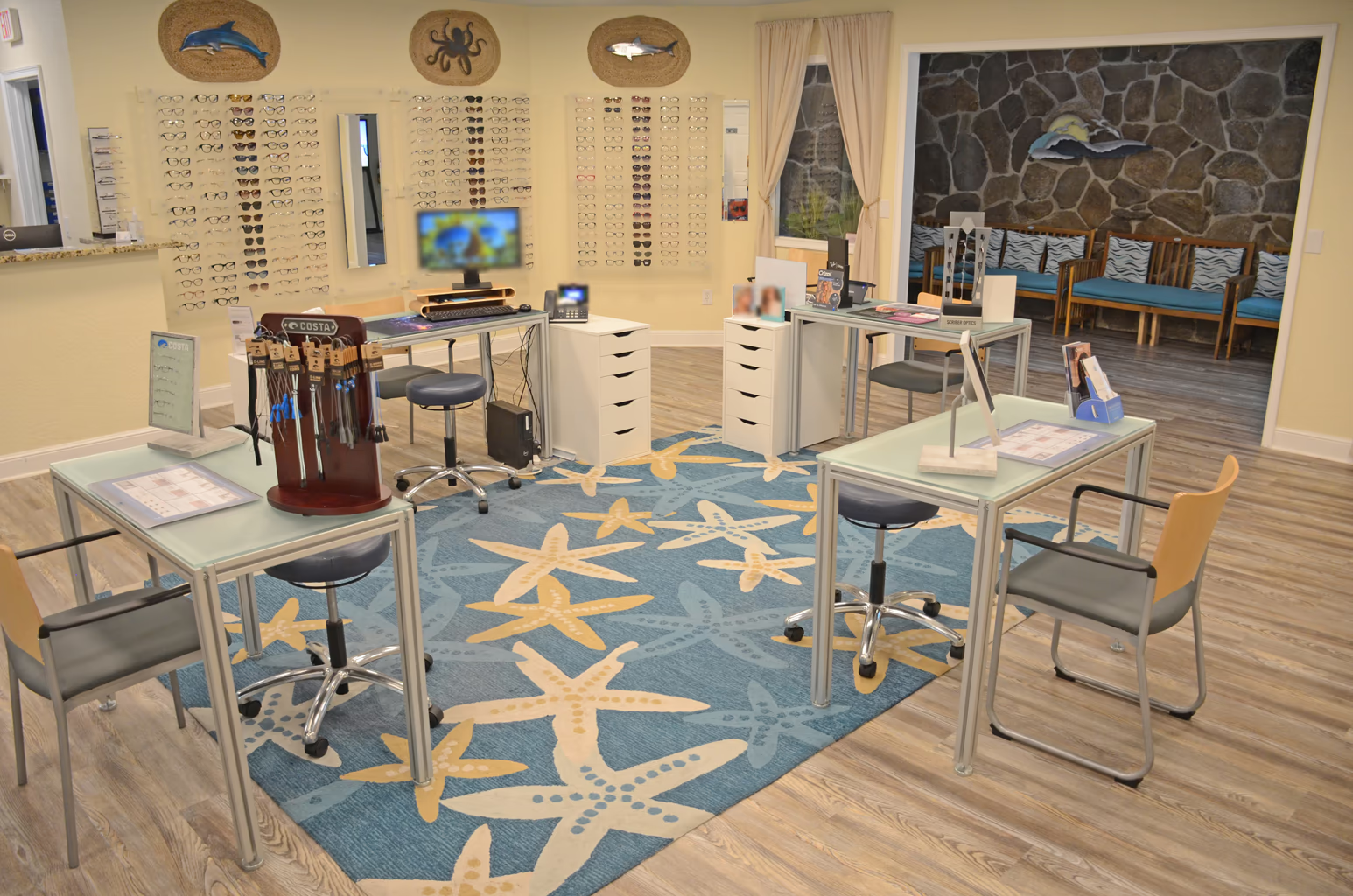
A refit looks at your lens and your dryness in the same visit. Dr. Greg Aker and Dr. Amanda Aker fit lenses Downtown, on the second floor with an elevator. Dr. Sarah Koehnemann and Dr. Jennifer Bradley fit them at Playalinda, all on one floor. Contact lenses were Dr. Greg Aker's focus in optometry school, and he has fitted them in Titusville for more than 40 years.
- 1
Tell us about your day
Screens, the beach, how many hours you want to wear lenses, and what time the burning starts. Your day helps us choose the lens.
- 2
A look at your tears
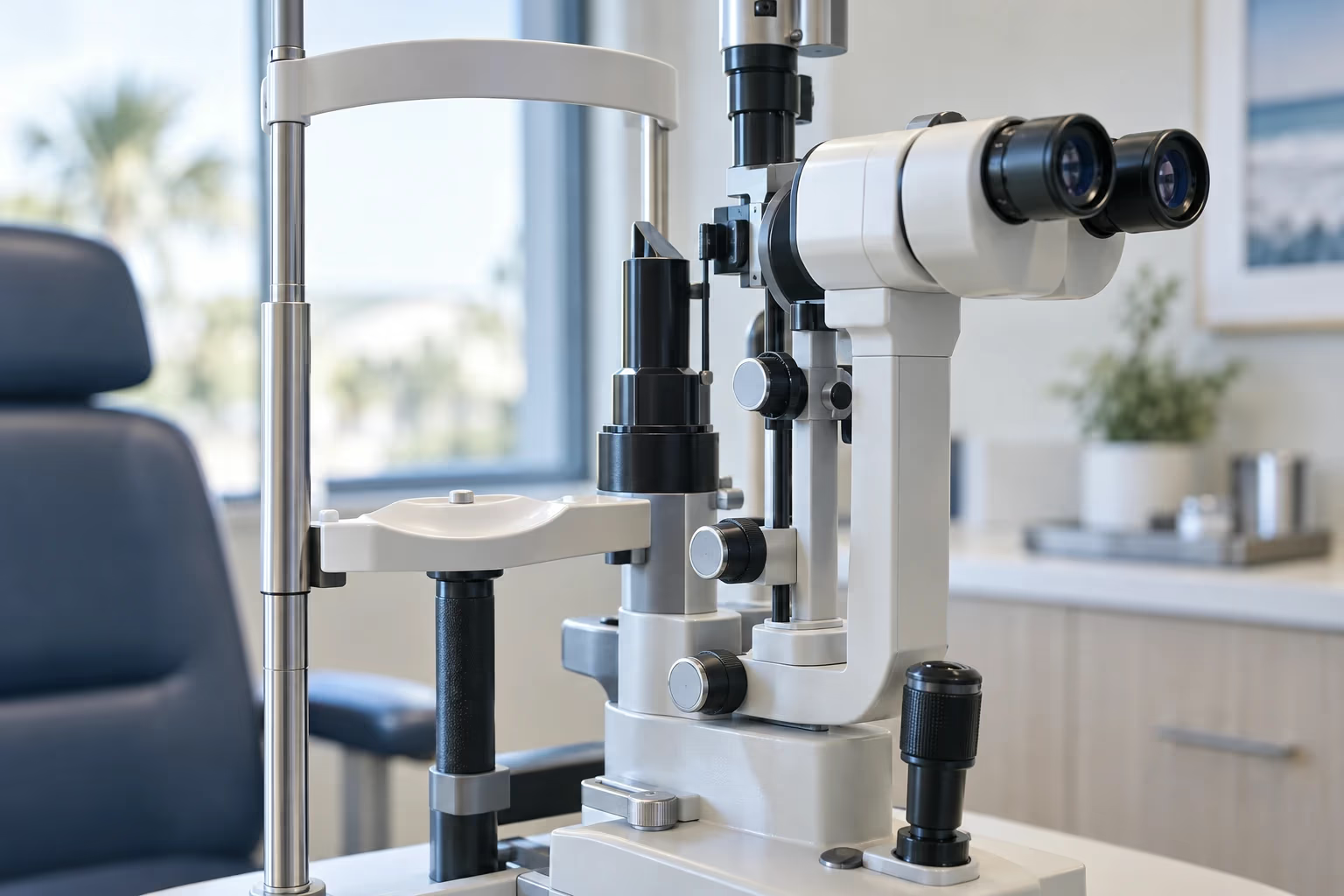
We check your eye health, the surface of your eye, and how well your tears hold up under the slit lamp, along with the oil glands in your eyelids.
- 3
A trial lens on your eye
We check it under the microscope for centering and movement, and we measure your vision through it. If it is not right, we try another.
- 4
A plan for the dryness
If the eye needs care too, we start it that day or set up a dry eye evaluation at either office.
Contact lens exams are busiest for us in January and March. If your lenses are drying out now, the fall is an easy time to get in. To get started, book a contact lens exam online at any hour, or call (321) 269-2021, Monday to Friday, 8am to 5pm. Once the new lens is right, we update your prescription so you can reorder contacts online in the lens we chose together.
Does insurance cover contacts and dry eye care?
Often, in two parts. Many vision plans pay part of the contact lens fitting and give you an allowance toward lenses. A dry eye evaluation is usually billed to medical insurance, because dry eye is a medical condition, and some in-office treatments, such as light therapy, are often not covered.
We check your benefits before your visit, so you hear the number before you sit down. We work with most vision plans and medical insurance, including EyeMed, VSP, Davis Vision, and Medicare, and you can check your plan before you call. Ordering an annual supply? Ask about the Alcon rebates, which run through December 2026.
Patients who pay on their own buy more boxes of contact lenses from us than anyone else. If you do not have a vision plan, ask us what the rebates take off before you order.