Kids' Eye Exams in TitusvilleSmall Eyes. Big Years Ahead.
Children do not tell you they cannot see well; they think everyone sees the way they do. Dr. Bradley trained just for their eyes, and we love seeing kids at both offices, from a baby's first exam through the last year of high school. The younger, the better.
4.9 stars from more than 2,000 Google reviewsas of September 2026
Dr. Bradley is at our Playalinda office and Dr. Amanda Aker sees children Downtown. Ask for either when you book, and tell us if your child is nervous so we can plan for it.
At a glance
Where
Both offices: Aker Eye Downtown, 338 S Washington Ave, Titusville, FL 32796, and Aker Eye Playalinda, 1114 S Washington Ave, Titusville, FL 32780.
Hours
Mon to Fri, 8am to 5pm at both Aker Eye offices. We open at 10am on the first and third Wednesday of the month.
Insurance
Most vision plans and medical insurance, including VSP, EyeMed, Davis Vision, Medicare, Humana, Blue Cross Blue Shield, Aetna, Cigna, UnitedHealthcare, and Tricare. Call (321) 269-2021 to confirm yours.
Payment
Cash, Check, Visa, Mastercard, American Express, Discover, HSA and FSA cards, Cherry financing, CareCredit, and Afterpay.
A colorful child's backpack rests on sunlit wooden porch steps in soft Florida morning light, a quiet cue for kids' eye exams in Titusville.
Did your child fail a school vision screening?
The note came home in the backpack. Or there was no note, just a tilted head at the dinner table, a book held an inch from the nose, or headaches that start with homework. Or nothing at all, and kindergarten is a month away.
Any of those is reason enough to bring them in. Most of what we find in a child is fixed with the right pair of glasses, and the rest is easier to help while the eyes are still growing. You do not need to know which it is before you call us.
When should my child have a first eye exam?
The American Optometric Association recommends a first exam between 6 and 12 months, another at age 3, one before school starts, and then every two years through the school years unless we ask to see your child sooner. If your child is past one of those and has never had an exam, that is fine. Bring them in now and we start from there.
A baby cannot read a chart and does not need to. With infants and toddlers we use lights, pictures, and lenses to see that each eye focuses and that the two eyes line up and move together. Older kids read letters or shapes. If you are not sure your child is ready, call and ask, and we will tell you.
Between exams, parents call us when they notice:
An eye that drifts in or out, even now and then
Squinting, sitting close, or holding a book near the face
A head tilt or one eye covered when looking at something
Headaches or tired eyes after reading
A failed screening at school or the pediatrician
A brother, sister, or parent who had a lazy eye or an eye turn as a child
Is a school vision screening the same as an eye exam?
No. A screening asks one question, whether your child can read a chart across the room, and it does a fair job of catching nearsightedness. It does not check farsightedness, focusing, eye teaming, or eye health. So a child can pass at school and still lose their place on every page.
A full exam asks all of the questions. We measure vision far and near, find the true prescription (with drops, so the number we get is honest), and check how the eyes line up, team, and track along a line. We test depth perception and color vision, and we look at the health of the eye inside and out with a dilated view. Failed the screening? Bring the note. Passed, and you still wonder? Bring them anyway.
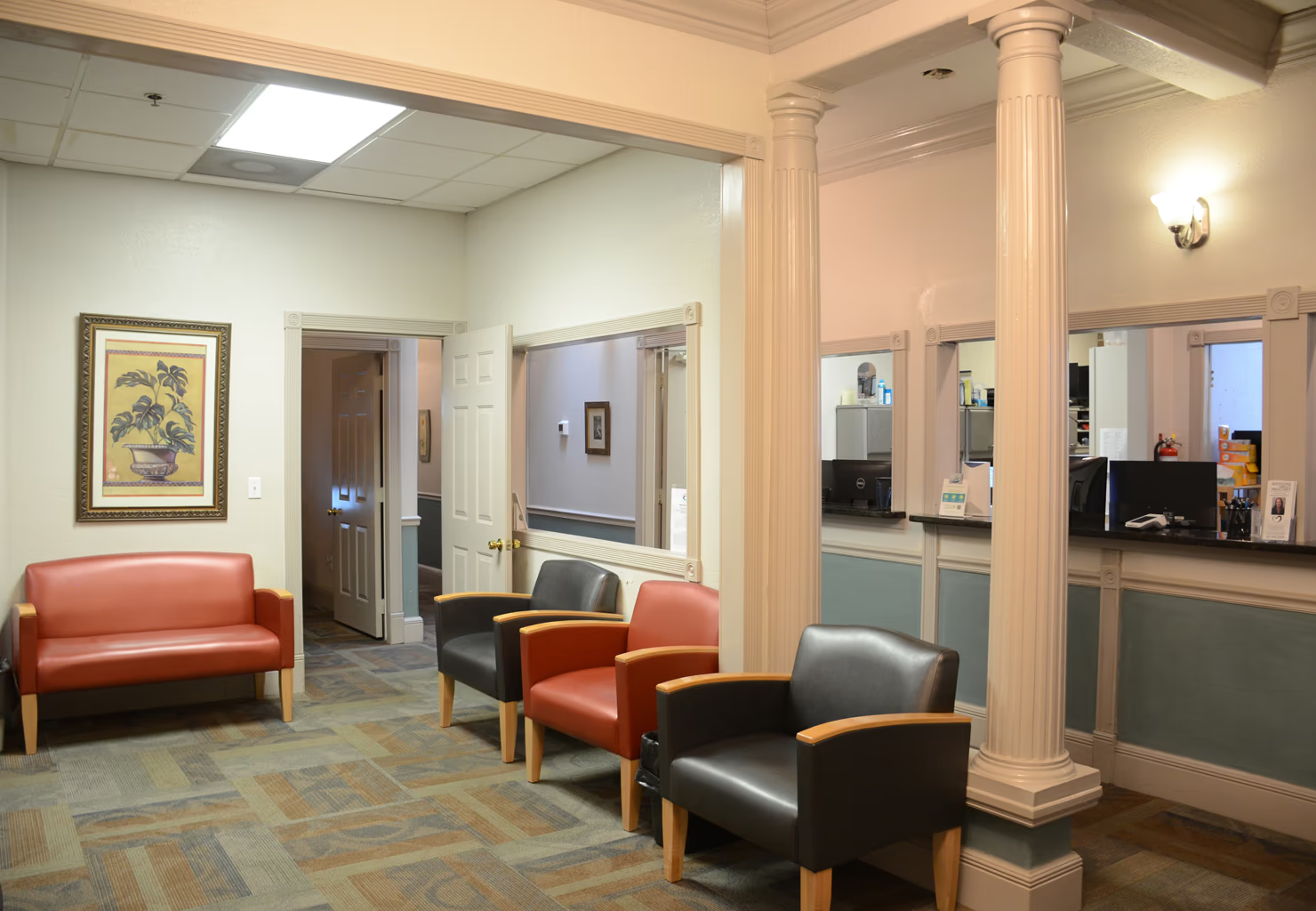
The children's corner in the waiting room at Aker Eye Playalinda, where Dr. Bradley sees kids
What should I expect at my child's first eye exam?
Plan on about an hour, and expect dilating drops. The drops do two jobs: they let us examine the health of the eyes, and they relax the focusing muscles so we can measure your child's true prescription. They sting for a few seconds. Then near vision is blurry and the eyes are sensitive to light for a few hours, so bring sunglasses and plan a quiet afternoon with no homework.
During the exam we check vision, depth perception, color vision, how the eyes line up, and the overall health of the eyes. Nothing hurts, most of it is looking at pictures and lights, and you stay in the room the whole time. What we want is a child who feels comfortable and a parent who leaves knowing exactly where their child's eyes stand. If a doctor visit has gone badly before, say so when you book and we will plan for a slower pace.
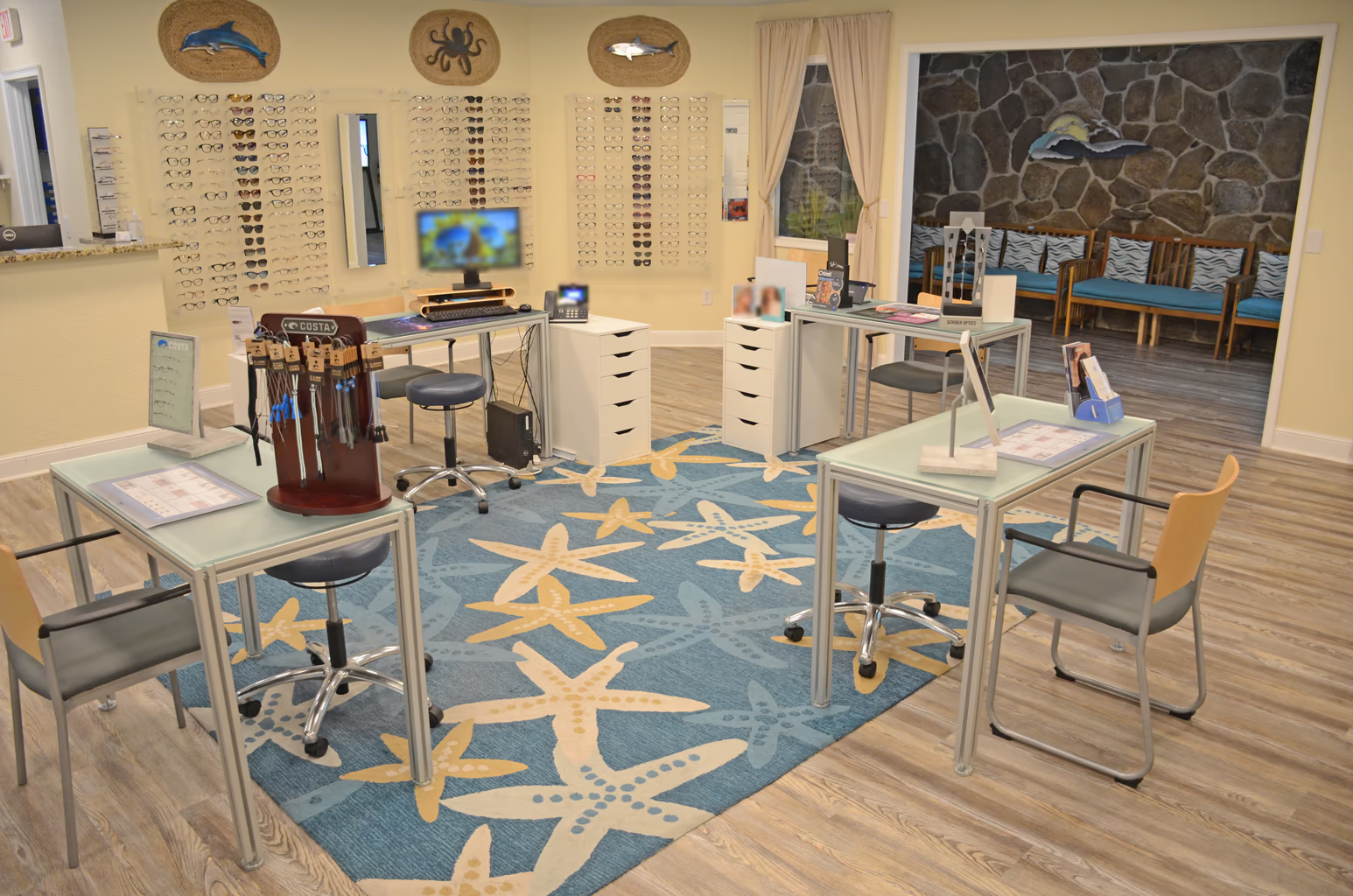
If your child needs glasses, picking the pair is the fun part. We keep a wide selection of children's frames for every age, in styles they will be excited to wear.
What to bring:
Your child's current glasses, if they have any
The screening note from school or the pediatrician
Your vision or medical insurance card
A favorite toy or snack for a little one
What is binocular vision, and why does it matter for reading?
Binocular vision is the two eyes working as a team: pointing at the same spot, focusing together, and moving smoothly along a line of print. When the teaming or the focusing is weak, a child can read 20/20 on the chart and still skip words, lose the line, tire fast, or come home from school with a headache. That is easy to mistake for a reading problem or a short attention span.
It is the field Dr. Bradley trained in during her residency in Chicago, so it is what she looks for, and it is what she treats. She cares for children with amblyopia (a lazy eye, where one eye did not develop properly), strabismus (an eye that turns in or out), and binocular vision disorders, all of which are easier to help while a child is young. She also offers myopia management for children and teenagers whose nearsightedness climbs with every new pair of glasses. Whatever we find, we tell you in plain words what it means for school and what the plan is.
Who sees children at Aker Eye, and does insurance cover it?
Dr. Jennifer Bradley at our Playalinda office, 1114 S Washington Ave, is our pediatric and binocular vision specialist, with a one-year residency in pediatrics and binocular vision at the Illinois College of Optometry and a fellowship in the American Academy of Optometry. A lazy eye, an eye turn, a binocular vision problem, or myopia management is a visit with her. Downtown, Dr. Amanda Aker and Dr. Greg Aker see children, and Dr. Koehnemann sees them at Playalinda, so for a routine exam pick whichever office is closer. Dr. Bradley and Dr. Amanda Aker both fit MiSight contact lenses for children, a lens designed to slow nearsightedness.
Most vision plans cover a yearly exam for children, and medical insurance covers a visit for a medical problem such as an eye turn, a lazy eye, or an infection. We check your benefits before the visit and tell you what you will owe. If you do not have coverage, call us at (321) 269-2021 and we will give you the self-pay price before you book.
What Titusville patients say about pediatric eye exam at Aker Eye
Straight from the neighbors who came to us for exactly this, and a few more who see the same doctors you will.
“Dr Amanda and the staff did a wonderful job with my daughter’s first eye exam. They were very caring and sweet. They even gave her a gift box at the end to keep the whole experience positive. Thank you!”
Danyel L.· Downtown · Google
“We love Dr. Bradley. She is great with my daughter and the office has always been able to get us in if something comes up.”
Jessica M.· Downtown · Google
“I had my first eye exam today with Dr. Bradley. She was amazing! Thorough, patient, very knowledgeable and made me feel comfortable.”
Jennifer F.· Downtown · Google
“Such a great experience for me and my daughter. Staff & Doctor was nice and friendly and wondering .”
Brandon L.· Downtown · Google
“The Aker Eyecare staff are kind and caring. Dr Bradley was amazing with our son. So glad we found this place!”
Jenna· Downtown · Google
“Excellent and clean facility. Always polite with a play area for the kids. Very gentle with children and explain everything. Thank you!”
Shelby D.· Downtown · Google
“Dr. Bradley and everyone else at Aker Playalinda are amazing with my son. They are friendly, helpful, and knowledgeable. So glad we found them!”
Rani U.· Downtown · Google
“Dr. Aker is a great eye doctor. My husband, kids, and myself have all seen him for years. He’s great with adults and kids alike, is educated, and friendly.”
Rhiannon T.· Downtown · Google
“Dr. Sarah Koehnemann is amazing! I brought my 7 year old son for his first eye exam today. The front desk, and tech were also so great with him. He had a great first eye example experience.”
Sierra H.· Playalinda · Google
“Dr. Aker is the absolute best around! I have been seeing him since I was a kid. He's honest, caring and excellent in his field. He serves his patients and our community well.”
C· Downtown · Google
Book Your Child's Eye Exam in Titusville
Give us your child's age and what you have noticed, and we will find a time and tell you which doctor to ask for. We answer (321) 269-2021 Monday through Friday, 8am to 5pm.
One number reaches both of our offices
New patients are welcome, and we check your insurance before your visit
Bring your current glasses or contacts and your insurance card
Mon to Fri, 8am to 5pm, both offices. We open at 10am on the first and third Wednesday of the month.
Questions Titusville patients ask us about pediatric eye exam
Who is the best pediatric eye doctor in Titusville?
Dr. Jennifer Bradley at our Playalinda office is the doctor Titusville parents ask for by name. She is residency trained in pediatrics and binocular vision at the Illinois College of Optometry and a Fellow of the American Academy of Optometry. Our patients rate us 4.9 stars from 2,027 Google reviews as of September 2026, and Titusville families have trusted us with their children since 2004. Call (321) 269-2021 to book.
At what age should a child have a first eye exam?
Between 6 and 12 months, by the American Optometric Association's schedule, then at age 3, once before school starts, and every two years after that through age 18. Babies do not have to know letters; we use lights and pictures. If your child is behind that schedule, call and we will tell you when to come.
How much does a pediatric eye exam cost?
With a vision plan, usually a copay, since most plans cover a yearly children's exam. Medical insurance covers a visit for a medical problem such as an eye turn or an infection. We look up your plan before the visit and tell you your share. Without coverage, call us and we will quote the self-pay price up front, so there is no surprise at the desk.
My child passed the school screening. Do they still need an eye exam?
Yes. A screening checks distance vision on a chart and little else. It does not measure farsightedness, focusing, or how the eyes work together, and a child can sail through it and still struggle to read. Think of the screening as a smoke detector and the exam as the visit that tells you what is actually going on.
How long does a child's eye exam take?
Plan on about an hour for a first exam. That covers vision, the prescription, depth perception, color vision, eye alignment, and a dilated look at the health of the eyes, at a pace that suits your child. Later exams are usually shorter. Bring a snack and, if glasses are on the list, leave time to pick out a pair.
Will my child need dilating drops?
Yes, expect them, especially at a first exam or when we are choosing a first pair of glasses. Children focus so strongly that we cannot get a true measurement without relaxing the focusing muscle. The drops sting for a moment and blur near vision for a few hours. Keep the afternoon easy, bring sunglasses, and let the homework wait until tomorrow.
Do you treat lazy eye, an eye turn, or nearsightedness that keeps getting worse?
Yes. Dr. Bradley at our Playalinda office treats amblyopia (lazy eye), strabismus (an eye turn), and binocular vision disorders, and she offers myopia management for children whose nearsightedness climbs year after year. She and Dr. Amanda Aker, Downtown, both fit MiSight lenses, which are designed to slow nearsightedness. Call us and we will book your child with the right doctor.
Can a child wear contact lenses?
Yes, once they are ready to handle them, and that is a maturity question more than an age question. Dr. Bradley at Playalinda and Dr. Amanda Aker at Downtown both fit MiSight lenses, which are made for children and designed to slow nearsightedness as they grow. A contact lens fitting is a separate visit, and your child practices putting lenses in and taking them out with us before they leave.
What are signs my child may need glasses?
Squinting, sitting close to the TV, holding books close, a head tilt, rubbing the eyes, headaches after reading, or falling behind in reading. Plenty of children show none of these and still need glasses, which is why the exam schedule matters. None of these is a diagnosis. They are reasons to book, and we would be glad to see your child.