

Vision Source

Eye disease care

Who Treats Glaucoma, Macular Degeneration, Cataracts, and Diabetic Eye Disease in Titusville?

All four optometrists at Aker Eye Vision Source find and follow these four eye diseases, at both of our offices on S Washington Ave in Titusville. Dr. Greg Aker, a Southern Diplomate in Glaucoma Management, and Dr. Amanda Aker see patients Downtown at 338 S Washington Ave. Dr. Sarah Koehnemann and Dr. Jennifer Bradley see patients at Playalinda, 1114 S Washington Ave. When you need surgery, laser, or injections, we send you to a specialist and keep caring for you here. We have done this work in Titusville since 2004. Call (321) 269-2021 to book.

Updated

What we do here, and when we send you to a specialist

Glaucoma
What we do at Aker EyePressure checks, OCT scans, visual fields, and the daily drops
When we refer youTo a surgeon for laser or surgery when drops are not enough
Macular degeneration
What we do at Aker EyeDilated exams, Optomap photos, and OCT scans of the macula
When we refer youTo a retina specialist for injections if it turns wet
Cataracts
What we do at Aker EyeThe evaluation, and the check-ups before and after surgery
When we refer youTo a cataract surgeon when glasses stop helping
Diabetic eye disease
What we do at Aker EyeA yearly dilated exam with retinal imaging
When we refer youTo a retina specialist for laser or injections when it needs treatment

Question 1

What are the treatments for glaucoma?

For most people, glaucoma treatment is one eye drop a day that lowers the pressure inside the eye. Some patients need two drops, and a few need a pill as well. When drops are not enough, a laser procedure or surgery can help the eye drain. We do not do those ourselves. We send you to a surgeon with your scans, and your follow-up care comes back to us.

No treatment brings back nerve tissue that is already lost, and that includes laser. The aim is to hold the pressure where your nerve can live with it. All four of us treat glaucoma at either office.
Question 2

Does Medicare cover glaucoma treatment and other eye disease care?

Yes, as a rule. Glaucoma, macular degeneration, cataracts, and diabetic eye disease are medical problems. So the visits, scans, and tests go to Medicare or your medical insurance, not your vision plan, and your usual copay and deductible apply. Glaucoma drops go through your pharmacy benefit or Part D.

What Medicare usually leaves out is the routine glasses check, a split we explain in eye exams after 65. Call us with your plan name and we will check your benefits before you come in.

Question 3

What is the treatment for macular degeneration?

It depends on the kind. Dry macular degeneration is far more common, and no drop or pill reverses it. Care means close watching with OCT scans, sunglasses outdoors, and not smoking. For some stages, a specific eye vitamin formula can help slow it, and we will tell you if your stage is one of them.

Wet macular degeneration is treated with injections into the eye, given by a retina specialist. We do not give them here. When a scan shows fluid, we refer you quickly and keep seeing you in between. All four of us follow macular degeneration at both offices.

Question 4

Who does cataract surgery, and how long does it take?

A cataract surgeon does the operation, and we do the visits before and after it. That is called co-management. We tell you when it is time, send your records ahead, and see you for the check-ups at whichever office you already use. The operation itself usually takes less than half an hour per eye, and you go home the same day.

Dr. Greg Aker has walked a great many neighbors through cataract care, and all four of us evaluate cataracts at both offices.

Question 5

Does Medicare cover cataract surgery, and what does it cost?

Medicare and most medical plans usually cover cataract surgery with a standard lens implant, plus the evaluation and the follow-up visits. Implants that correct astigmatism or cut the need for readers usually cost extra. The surgeon's office quotes the surgery itself, so we cannot give you that number. For your cataract evaluation and check-ups with us, call (321) 269-2021 with your plan name and we will check your benefits first.

Question 6

Can an eye exam detect diabetes?

Sometimes, yes. Diabetes can change the small blood vessels in the retina, and those changes can show before anyone has checked your blood sugar. When we see something that looks like it, we tell you and send you to your primary doctor for a blood test. We do not diagnose diabetes ourselves, but a diabetic eye exam is where many people first hear the word.

Question 7

Why do diabetics need a dilated eye exam every year?

Because diabetic retinopathy has no symptoms early on. The first changes often sit at the edges of the retina, and we see those best once drops open your pupils. A year is about how fast things can move, so a yearly look finds changes while there is time to act.

We dilate patients with diabetes once a year. Bring sunglasses, since your near vision stays blurry for a few hours. We can send a report to your primary care doctor. Book a diabetic eye exam at either office.

Question 8

What is Optomap retinal imaging?

The Optomap is a camera made by Optos. It takes a wide picture of your retina in one flash per eye, with no drops. We put the photo on the screen at your visit, so you see what we see. Then we keep it, so next year's photo has something to be compared with.

It does not always replace dilation. Dilation still lets us see all the way to the edge of the retina. The Optomap is one of several instruments in our exam rooms, along with the OCT scanner.

Book an Eye Exam in Titusville and Ask Us About Eye Disease Care

Call or text us and we will get you on the books, or pick your own time online. We answer (321) 269-2021 Monday through Friday, 8am to 5pm.

  • One number reaches both of our offices
  • New patients are welcome, and we check your insurance before your visit
  • Bring your current glasses or contacts and your insurance card
  • We have been independent and local since 2004

4.9 stars from more than 2,000 Google reviews

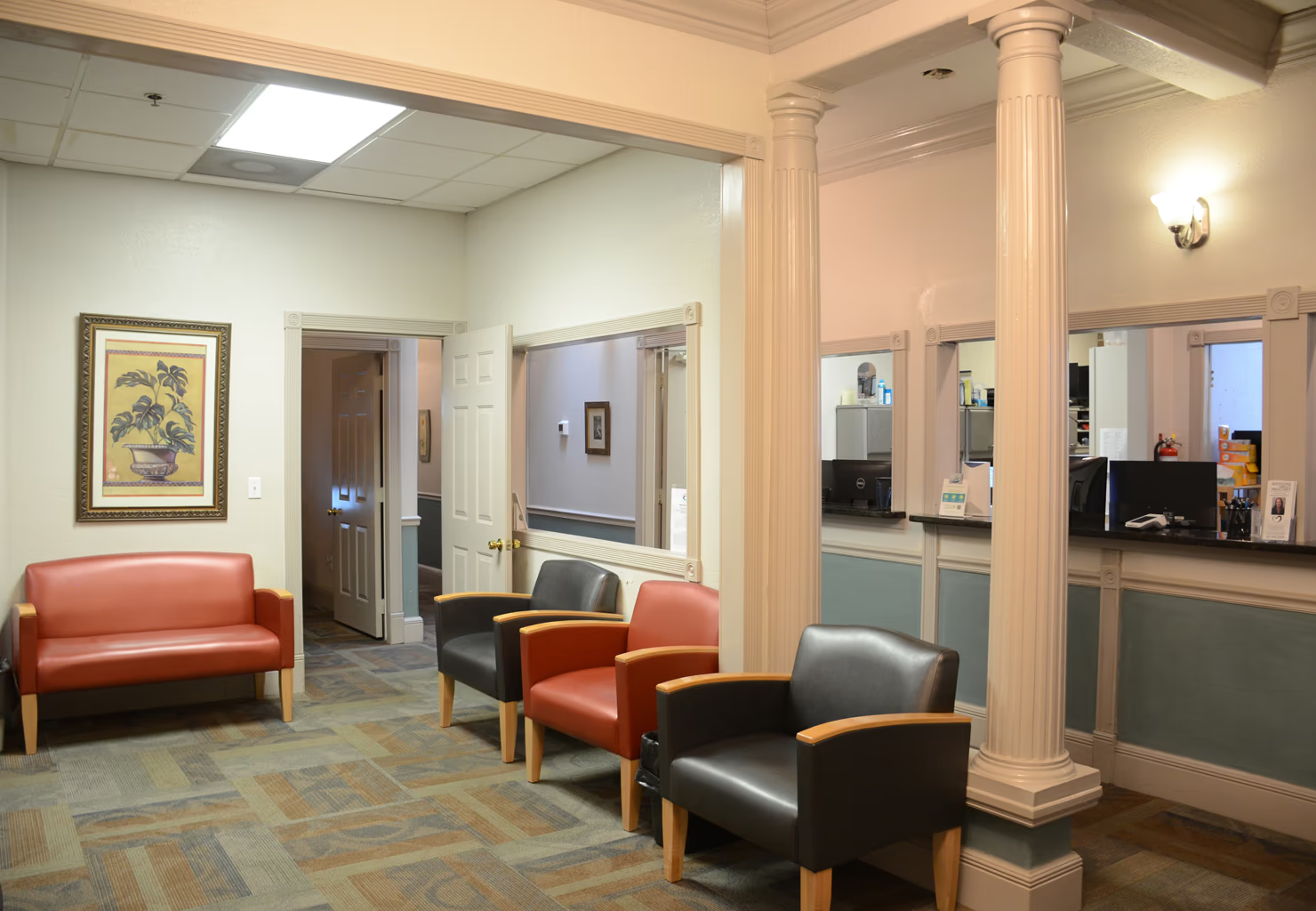
The upstairs waiting room at Aker Eye Downtown, with the check-in window on the right
Downtown, waiting roomThe upstairs waiting room at Aker Eye Downtown, with the check-in window on the right
Call (321) 269-2021Book an Appointment