
What counts as an eye emergency?
An eye emergency is any change in your eye or your sight that came on suddenly: new flashes or floaters, sudden blurred vision or vision loss in one eye, a red eye that hurts, an eye injury, or a foreign object in the eye that will not rinse out. Any of those is a reason to call us for urgent eye care the same day.
We work in about three or four urgent visits every day across our two Titusville offices, so a call about a sore eye is not a bother. It is a normal part of our morning. Most of what feels like an emergency turns out to be one of the common problems we treat every week, and most of it turns out fine when it is looked at quickly. A few things cannot wait, and waiting is the one mistake we see people make. The only way to know which one is yours is to let us look.
- Sudden flashes of light, or a new shower of floaters
- Sudden loss of vision, or a sudden blur in one eye
- Double vision that came on suddenly
- Eye pain, especially with a headache or nausea
- An eye injury, a scratch, or a foreign object that will not rinse out
- Swelling, bruising, or a black eye after a blow to the face
- Bleeding on the white of the eye after an injury
- A shadow or curtain across part of your vision
- A red eye that hurts, not just one that itches
- New sensitivity to light, or halos around lights
You do not have to decide how bad it is before you call. That is our job. Say it is urgent when you reach us at (321) 269-2021, and we will say which office can see you first.
Should I go to the ER or call an eye doctor first?
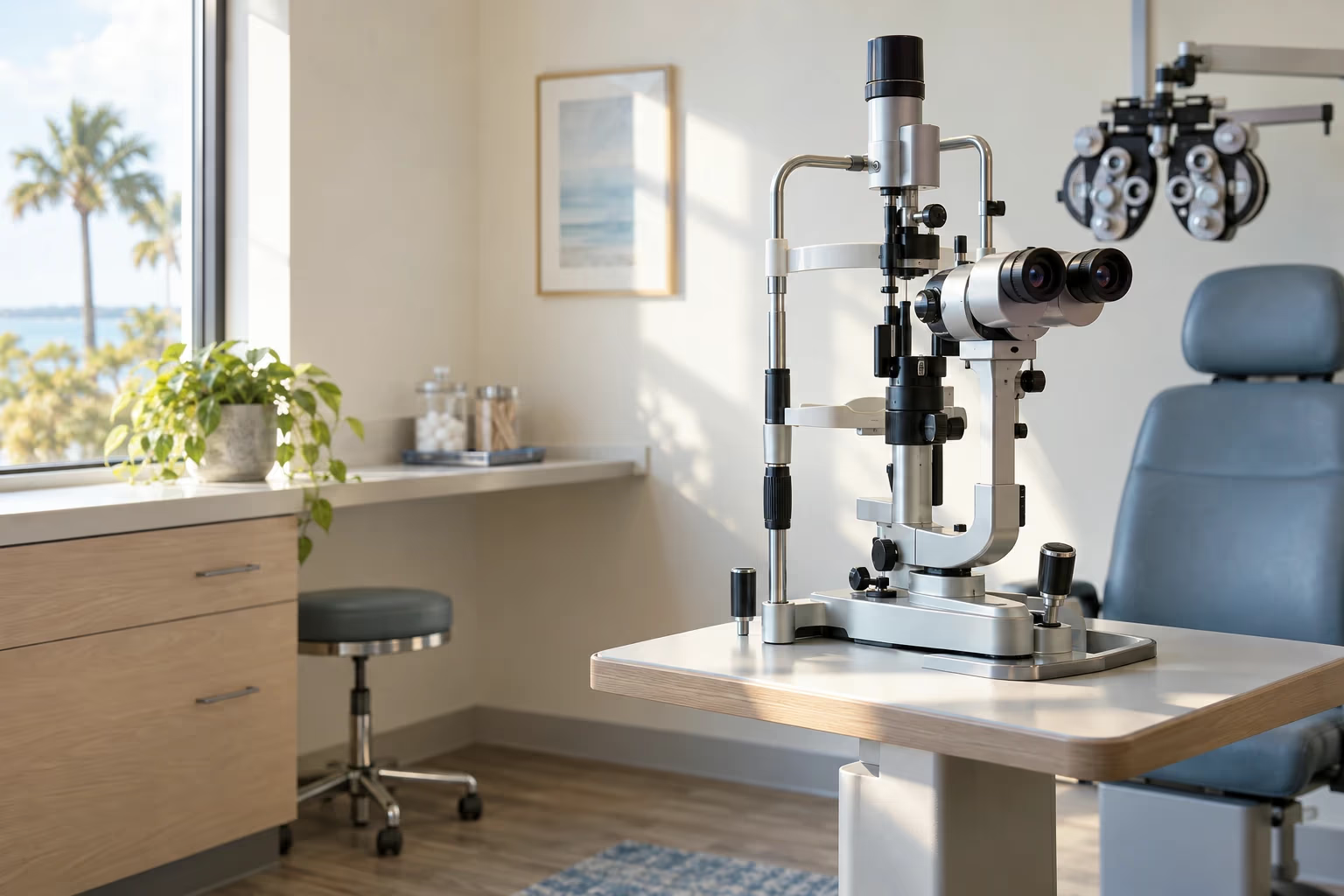
Call an eye doctor first for almost everything, because emergency eye care is what our exam rooms are built for. We can do more for your eye than an emergency room or an urgent care can, and do it faster. Our exam rooms have a slit lamp, the microscope that shows the front of the eye in fine detail, retinal imaging that photographs the back of the eye, and instruments that read the pressure inside it. Most urgent care clinics have none of those. Many ERs take a look, then send you to an eye doctor anyway, so you pay for two visits and wait through both.
Some things do belong at the hospital, and we would rather you go straight there for immediate medical attention. Go to the nearest emergency room or call 911 for an object embedded in the eye, a cut to the eyelid or the eyeball, heavy bleeding, an eye problem that came with a blow to the head, or a vision change that comes with a severe headache, weakness on one side, or trouble speaking.
One rule stands on its own. If a chemical splashes in your eye, keep the eye flushed with clean, cool water for 15 minutes before you do anything else, then call us. Those minutes at the sink matter more than the drive.
Call us today, go to the hospital, or wait for a regular visit?
When you are not sure, use the table as a guide, and when the table does not settle it, call. We would rather answer a question that turns out to be nothing than miss the one that was not.
| What you notice | What to do | Why |
|---|---|---|
| New flashes, a shower of floaters, or a shadow across your vision | Call us today | The retina may need a look the same day, with dilating drops and a wide image of the back of the eye |
| Sudden blur or vision loss in one eye | Call us today | A sudden change is the kind we most want to see early |
| A red eye that hurts, new light sensitivity, or eye pain with a headache | Call us today | Pain and light sensitivity separate a red eye that needs treatment from one that only itches |
| Sand, metal, an eyelash, or grit in the eye that will not rinse out | Call us today | We remove a foreign object from the surface of the eye in the exam chair, with numbing drops and the slit lamp |
| Swelling or a black eye after a hit, with no cut and no change in vision | Call us today | A look at the eye itself tells us whether the injury stopped at the eyelid |
| An object embedded in the eye, a cut to the eyelid or eyeball, or an eye injury with a blow to the head | Go to the ER or call 911 | Those need immediate medical attention at a hospital; cover the eye without pressing on it |
| A chemical splash | Keep the eye flushed for 15 minutes, then call us | Clean water at the sink does the first and most important part of the treatment |
| Gritty, burning, or watery eyes that have come and gone for months | Book a regular visit | That pattern is usually dry eye, and we treat it at both offices |
| A floater you have had for years that drifts around | Mention it at your next exam | An old floater that has not changed is usually harmless; a new shower of them is the one to call about |
How we sort an eye problem when you call
What happens at an urgent eye visit at Aker Eye?
We look at the eye first and ask questions second, so you are in the chair fast. Expect a check of your vision, a look at the front of the eye under the slit lamp, an eye pressure reading, and, for flashes, floaters, or vision loss, dilating drops and a wide image of the retina. Plan on about an hour, a little longer if we dilate.
A good deal of it we treat right in the office. We remove metal, sand, and other debris from the surface of the eye, treat scratches on the cornea, treat pink eye and other infections, and settle allergy and dry eye flare-ups. When we find something that needs a surgeon, such as a retinal tear, we refer you to the right specialists and explain what happens next before you leave.
- 1
Leave the eye alone
Do not rub it, and do not attempt to remove anything from it with a fingertip, cotton swabs, or tweezers. If an object is embedded in the eye rather than sitting on it, cover the eye without pressing and go to the hospital.
- 2
Take your contact lenses out
If you wear contact lenses, leave them out until we have seen you, and bring the box or a lens in its case so we know what you wear.
- 3
Have someone drive you
If your vision is affected, or we may dilate your eyes, let someone else drive. Bring your glasses, your medical insurance card, and the names of any eye drops or medicines you use.
Two people with the same symptoms can have very different causes, which is why we look before we say anything. If your symptoms are not on any list and you are worried, call anyway. The full picture of what we do on an urgent visit is on our emergency eye care page.
What is not an eye emergency?
Eyes that burn, sting, or water by the afternoon, and have for months, are not an emergency. That pattern is usually dry eye, and it deserves a regular visit rather than a rushed one. We treat it at both offices, and dry eye treatment starts with a look at the oil glands in your eyelids, because the cause decides the treatment.
An eye that itches without pain, a floater that has drifted around for years, or a slow change in how well you read the menu can all wait for a regular appointment. Schedule that online any hour of the day at our booking page, and mention what you noticed so we plan the right kind of eye care visit.
Children are the exception to every wait-and-see rule. A swollen lid, a scratch from a fingernail, or a red eye that came on fast in a child is a call to us the same day. Kids do not tell you how much an eye hurts, and Dr. Bradley, who trained for children's eyes, would rather see a child for nothing than miss a scratched cornea. A first look, even a routine one, starts with a kids' eye exam.
Who sees eye emergencies in Titusville, and where?
All four of our optometrists take urgent visits, at both offices, Monday to Friday, 8am to 5pm, so emergency eye care in Titusville does not mean a drive to Orlando. Dr. Amanda Aker's residency at the Illinois College of Optometry was a full year of primary care and ocular disease, urgent visits included, and she practices Downtown beside her father, Dr. Greg Aker. Dr. Koehnemann and Dr. Bradley take urgent visits at Playalinda. When you call, we tell you which office can see you first.
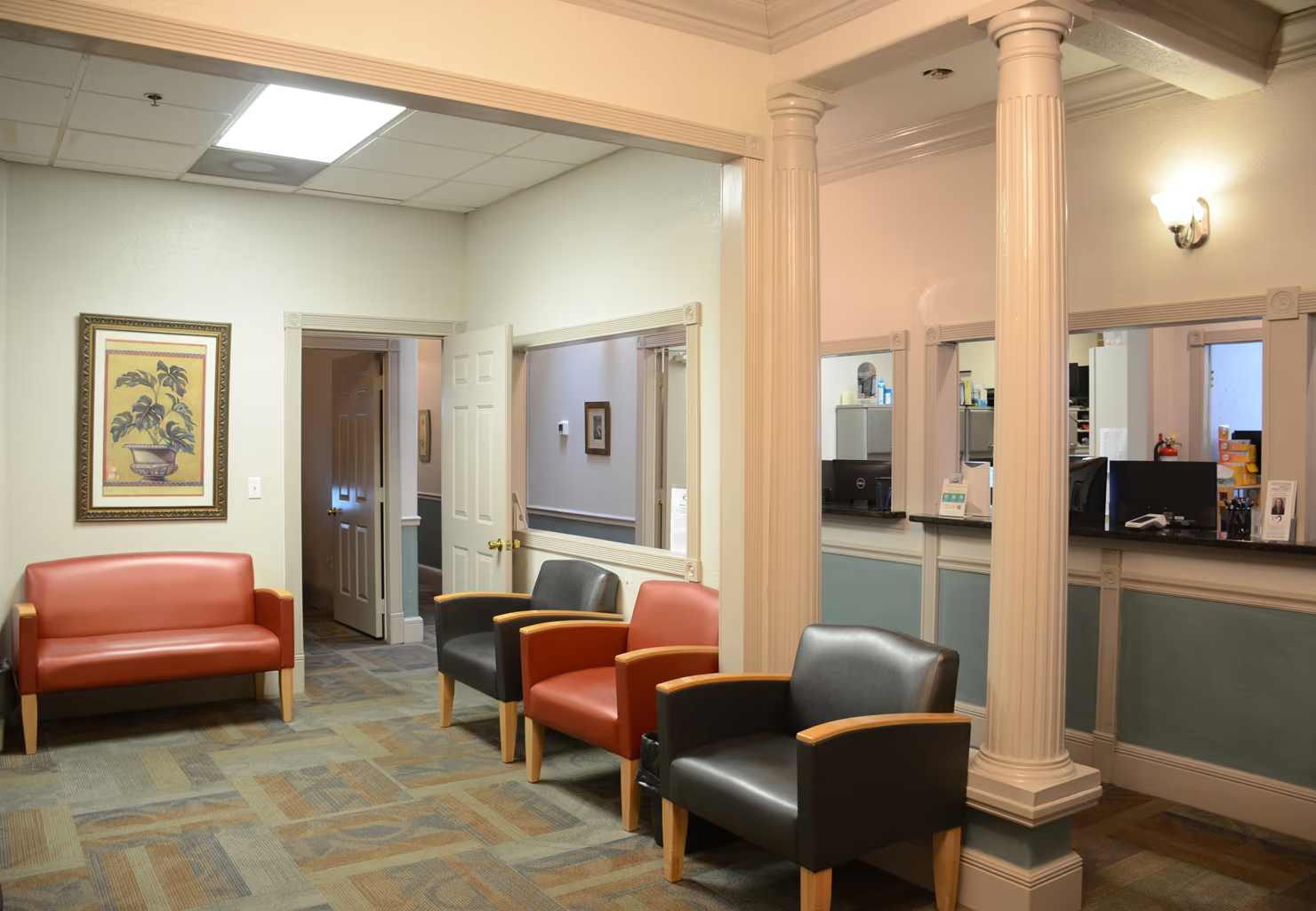
Downtown, at 338 S Washington Ave, is on the second floor with an elevator just inside the door. Playalinda, at 1114 S Washington Ave, is all on one floor, which is worth knowing if you are hurt or cannot see well. Directions to both offices are a tap away, and on a phone the number on our site calls us directly.
Does insurance cover an urgent eye visit?
Usually, yes, through your medical insurance rather than your vision plan, because urgent eye care is medical care. Bring your medical card, not just the vision plan card. A copay like the one for your regular doctor is typical, and we check your benefits when you call so you know before you arrive.
If you have no insurance, tell us when you call and we will give you the self-pay price. Cost should never be the reason you wait when your eye hurts or your sight has changed. What we take and how we check it is on our insurance page.