
How long do eyes stay dilated after an eye exam?
For most people, dilating eye drops wear off in a few hours, and for some it takes the rest of the afternoon. At Aker Eye Downtown, 338 S Washington Ave, and Aker Eye Playalinda, 1114 S Washington Ave, in Titusville, the drops widen your pupils, the dark opening in the center of the colored iris. More light enters, and we can see the retina and the optic nerve at the back of the eye. Until the drops wear off, expect blurry vision up close and trouble with bright light.
The blur is with close objects: a phone screen, a receipt, the small print on a menu. The drops also relax the focusing muscle inside the eye, which limits the eye's ability to focus up close for a while. They take a little while to work before we can look, so a dilated eye exam runs longer than a glasses check. Plan on about an hour with us, and a bit more the first time you visit.
Why do eye doctors dilate your eyes, and who do we dilate?
Dilation lets us examine the whole back of the eye, all the way to its edges and in three dimensions, including the peripheral parts. That is where diabetes leaves its early changes, where we check the optic nerve for glaucoma, and where AMD shows itself. Many eye diseases give no warning you can feel, so this look matters most when your vision seems fine and your eyes feel healthy. The risk of eye diseases increases with age, with diabetes, and with a family history of glaucoma, which is why those patients see the drops more often. Our own appointment records from September 2025 through August 2026 say nearly four exam patients in ten are 65 or over, the age when glaucoma and macular degeneration become more common.
We take an Optomap image at every eye exam, and it covers most of the retina without drops. Dilation shows us the parts a photo cannot, so it is an important part of your eye health care. Here is how often we use the drops at both offices.
| Who | How often we dilate | What we are looking at |
|---|---|---|
| New patients, any age | At your first exam with us | A full first look at the retina and optic nerve, to compare against later |
| Diabetes | Every year | The retina's blood vessels, out to the edges, at a diabetic eye exam |
| Glaucoma or macular degeneration | Every year | The optic nerve for glaucoma, the macula for macular degeneration |
| Everyone else | About every three years | The whole retina, with a retinal image at every visit in between |
| Children at a first exam | Expected | The health of the eye, and a true prescription |
| New flashes, floaters, or vision loss | The same day | The retina, at an urgent visit |
Who we dilate at Aker Eye, and how often
About one exam in four on our schedule is a new patient, and every new patient gets the drops. If this is your first visit with us, plan the ride home before you come in.
Not sure whether this visit includes drops? Ask when you book and we will tell you.
What does it feel like when your eyes are dilated?
Under normal circumstances, your pupils react to light: they shrink in the sun and open wide in the dark. With a dilated pupil, the drops hold each one open, so more light gets in than your eyes are used to. In a sunny Titusville parking lot, that light sensitivity can feel harsh until the drops wear off. Indoors it is easier, and a dim room is easier still.
- A short sting when the eye drops go in, gone in a few seconds; they do not hurt after that
- Blurry vision up close: reading, texting, and price tags
- Glare outdoors, worst in the middle of a bright day
- Both eyes the same, since we dilate both
Can you drive after a dilated eye exam?
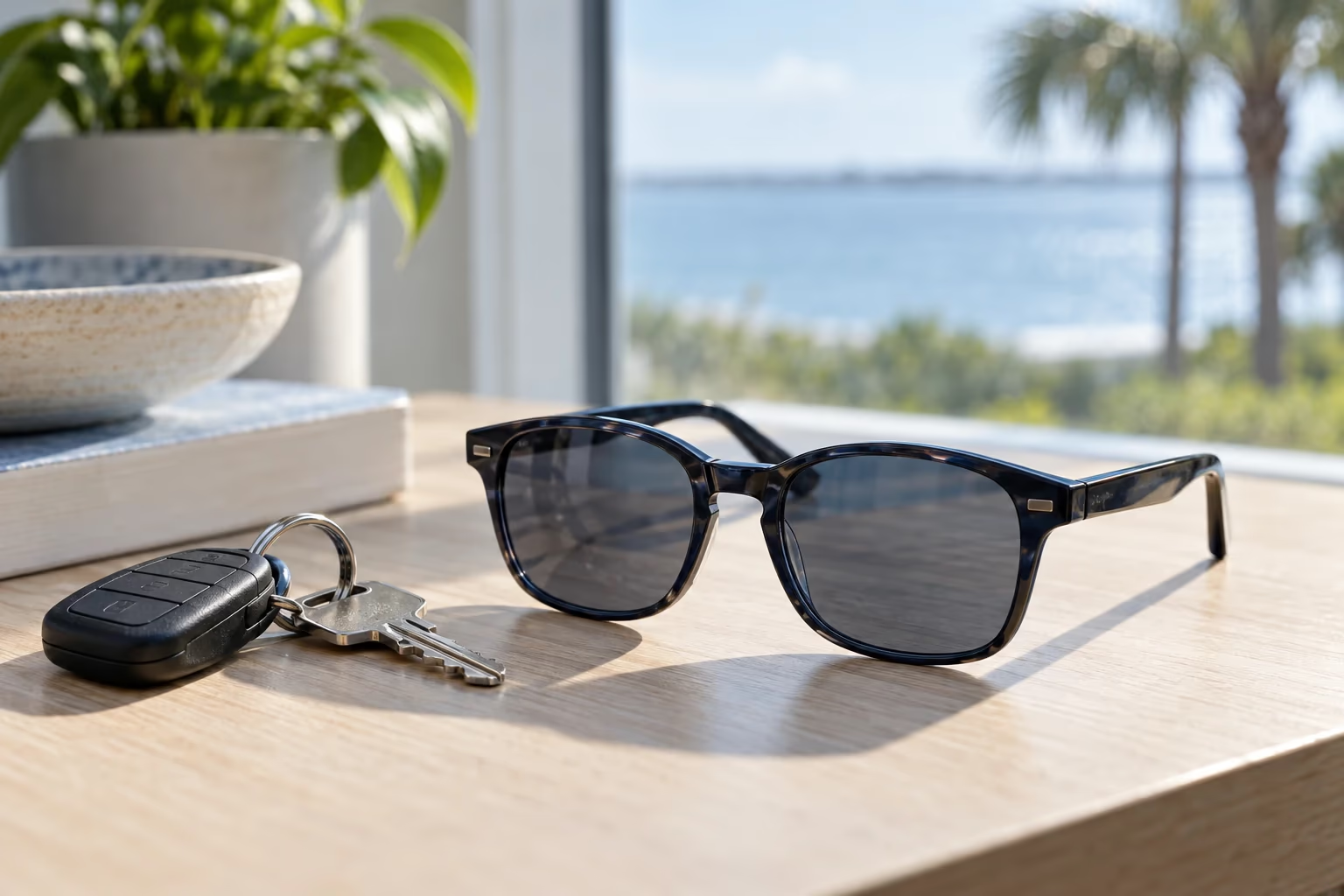
That is your call, and we would rather you plan for it than find out in the lot. If driving with dilated eyes does not sit right with you, ask a friend or family member to bring you. A few minutes of planning makes the whole afternoon easier.
- 1
Ask about drops when you book
Tell us if it is your first visit with us or if you have diabetes or an eye disease we watch every year. We will say whether to expect dilation.
- 2
Line up your ride
A friend or family member who can drive you home takes the worry out of the bright hours after.
- 3
Bring sunglasses
Your own pair, and a pair for any child coming in for an exam. Bring your current glasses too.
- 4
Book the scans with the exam
If we ask you back for testing, such as a scan of the retina or optic nerve, set the date before you leave. Testing visits are the easiest ones to put off, and those scans are how we see small changes from one year to the next.
- 5
Keep the afternoon light
Errands that need reading, paperwork, and long screen time can wait until tomorrow.
At Downtown we are on the second floor, and the elevator brings you back down to street level. Your driver can wait in the lot behind the building or the Julia Street public parking. At Playalinda everything is on one floor, so the walk to the car is short. Directions for both are on our offices page.
Is a morning or an afternoon appointment better if my eyes will be dilated?
Our mornings and afternoons fill about evenly, and 10 in the morning and 1 in the afternoon are our two busiest start times. Either can work. What matters is what you need to do afterward.
A morning visit gives the drops the rest of the day to wear off, much of it at home if you like. A late-afternoon visit means heading out into strong sun with wide pupils, so it suits you best when someone else is driving. Wednesday is our lightest day of the week, so it is a good pick for a quieter morning. On the first and third Wednesday of the month we open at 10am after our staff meeting, so the earliest slots those days start later.
Call us at (321) 269-2021 or book online to schedule your appointment, and tell us how your day looks. We will find a time that leaves room for the drops.
Will my child's eyes be dilated at the first eye exam?
Yes, plan on it. "A child's first pediatric eye exam typically lasts about an hour, and dilation should be expected," says Dr. Jennifer Bradley, who sees children at our Playalinda office.
The drops do two jobs for a child. They let us check the health of the eyes, and they relax the focusing muscles so we can measure a true prescription. Afterward your child's near vision is blurry and the eyes are sensitive to light until the drops wear off. Bring sunglasses and a snack, and plan a quiet afternoon with no homework. First exams for young children run busiest with us in October and December, so call a few weeks ahead for those months. Our kids' eye exams start with Dr. Bradley at Playalinda.